A sweeping view can make your heart skip. In Marin County, it can also shape your home’s value. If you’re thinking about selling or buying a view property, it’s not always obvious what the view is worth. This guide gives you a clear, practical way to separate emotion from market value so you can price with confidence and buy with clarity. Let’s dive in.
Why views matter in Marin
Marin’s hills, valleys, and waterfronts create a mix of view experiences that buyers prize. You see everything from San Francisco Bay and skyline scenes to Mount Tamalpais, Pacific outlooks, and protected open space. Because topography and local planning limit building, truly unobstructed, expansive views are scarce in certain pockets. That scarcity supports real premiums.
Views also tie into Bay Area lifestyle. Many buyers want easy access to the city paired with privacy, outdoor living, and a sense of nature. In that context, a great view is more than a backdrop. It becomes part of your daily rhythm and a key ingredient in perceived value.
What drives a view premium
To price or compare view homes, start by classifying the view itself. Clear definitions help you read comps and set expectations.
Classify the view quality
- Primary: Panoramic and uninterrupted, framed by your main living spaces, often with a major focal point such as the SF skyline or Golden Gate area.
- Secondary: Partial or angle-dependent, or visible from secondary rooms rather than the main living area.
- Glimpse/filtered: Sightlines are small or blocked by trees and nearby roofs.
Also note the directional type (bay or ocean water, skyline, mountain/woodland, protected open space) and the view’s permanence (unobstructable, protected by easement, or at risk due to nearby buildable lots).
When you describe your home’s view in this language, it becomes much easier to find and adjust comparable sales.
Sun and orientation
Orientation affects how your view feels and functions day to day.
- South-facing exposures usually bring consistent daylight and passive warmth.
- West-facing views often deliver sunsets, along with possible afternoon heat and glare.
- East-facing views capture morning light and cooler afternoons.
- North-facing views give even, diffuse light with less direct sun.
Where you experience the view matters too. A sunny, south-facing panorama from your great room is more useful to daily life than a similar view only visible from a guest room.
Microclimates and visibility
Marin’s microclimates are real. Fog and low clouds often affect coastal and valley-mouth areas, while ridge tops and eastern slopes can clear earlier. Wind exposure also shapes how much time you spend outside enjoying the view.
Ask simple, practical questions: How often is the view clear during typical showing hours? Is wind a factor on the deck in the afternoon? Do conditions shift by season? The more often the view is “presentable,” the more buyers tend to value it.
Indoor–outdoor flow adds value
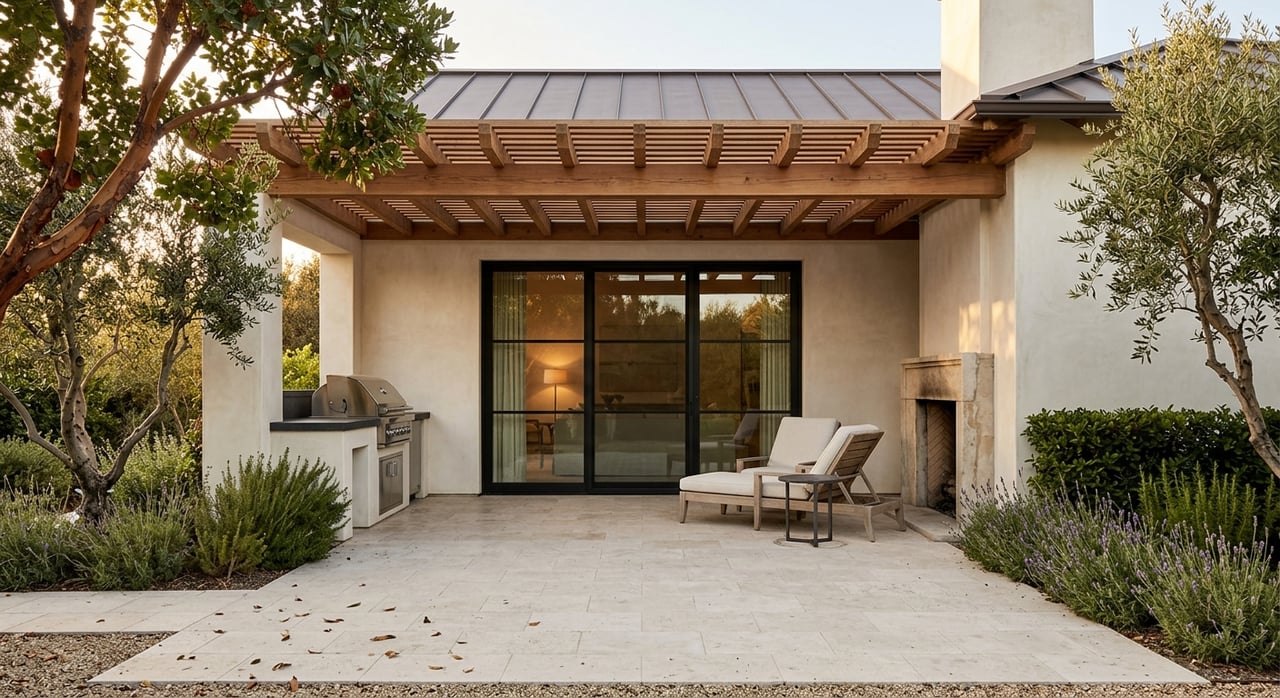
Design turns a view into usable living. Large windows, folding doors, and covered outdoor rooms make the view part of how you cook, dine, and host. Usable, sheltered decks and patios carry more value than exposed, hard-to-use terraces with the same sightline.
If you’ve added decks, sunrooms, or outdoor kitchens, verify permit status before pricing. Buyers and appraisers put more weight on permitted improvements. Quality, orientation, privacy, and weather protection all influence how much weight the market gives your outdoor spaces.
Permanence and protections
A stunning view can change if a neighbor builds higher or trees grow. That’s why permanence matters.
- Check your title for any recorded view or scenic easements.
- Review local setback and height limits and design review rules for your city or town in Marin.
- Ask planning departments about any pending applications on adjacent lots.
Views across water or protected open space often carry lower obstruction risk. Views across buildable lots carry more uncertainty. When risk is low and documented, buyers tend to pay more with greater confidence.
Pricing with comps that work
Pricing a view home is all about apples-to-apples comparisons. Use closed sales, not active listings, to anchor value. Then adjust for view quality, condition, and usability.
Define your comp universe
- Focus on the most relevant submarket in Marin (for example, Tiburon/Belvedere versus Mill Valley versus San Rafael or West Marin).
- Stay within a similar price band and lot type (ridge-top, hillside, waterfront, or valley).
- Create view buckets, such as primary panoramic bay, partial bay, Mount Tam only, or no view.
Adjust with evidence
- Paired sales: Find two recent nearby sales that are similar except for view quality. The price difference is a strong clue to the market’s view premium.
- Data modeling: In active submarkets, analysts use hedonic modeling to control for size, beds, baths, and condition, then isolate view effects. Your agent can translate these findings into simple percentages or dollar ranges.
- Market-level ranges: When data are thin, triangulate a reasonable premium range from several paired examples. Use ranges, not a single number, to reflect uncertainty.
Always adjust for condition first. A remodeled kitchen or refreshed primary suite can outweigh a view difference. Parking, privacy, and lot usability also influence price and should be considered before pinning down a view premium.
A simple example
Here is an illustrative scenario to show the method, not a Marin-specific fact. Two similar 2,400-square-foot homes on the same ridge sell within six months. One has an unobstructed, primary panoramic bay view and closes at 2,400,000. The other has no view and closes at 2,000,000. The difference, 400,000, is the paired-sale view premium for that pair, or about 166 per square foot. If other paired sales suggest a narrower spread, you would present a range and document the basis.
Avoid common traps
It’s easy to over-credit a view or miss key tradeoffs. Watch for these issues:
- Active listings: List prices reflect strategy and sentiment, not what buyers actually paid. Use closed sales for proof.
- One-off outliers: A single blockbuster sale can mislead. Look for repeatable patterns across multiple paired sales.
- Market momentum: When prices are rising or cooling, apply time adjustments so older comps reflect today’s conditions.
- Condition first: Newer systems, remodeled kitchens, and updated baths can eclipse a view. Adjust for condition before view.
- Access and privacy: Steep driveways, limited parking, or privacy tradeoffs can offset a view premium.
- Lot usability: A steep lot with a big view might offer less usable outdoor space than a flatter lot with a modest view.
Field checklist for sellers
Use this quick plan to prepare for pricing and showings:
- Photograph main view moments from living areas and outdoor spaces in both morning and late afternoon.
- Note compass bearing of the primary view and where the sun sits during peak hours.
- Document any tree, roofline, or nearby parcel that could block the view in future.
- Pull your preliminary title and flag any recorded view or scenic easements.
- Verify permit history for decks, additions, and outdoor rooms.
- Ask the local planning department about pending applications on adjacent lots.
- Gather closed sales from the past 6 to 12 months within your submarket and price tier.
- Sort comps into view buckets and highlight any strong paired-sale examples.
Buyers: pay for what you can use
When you fall in love with a view, make sure it fits your lifestyle in practice.
- Visit at different times to see light, wind, and fog patterns.
- Stand in the rooms where you live most. Confirm the view is visible and comfortable there.
- Step onto the deck in the late afternoon. If it is windy or hot, you may use it less.
- Ask about easements, height limits, and nearby build potential to gauge long-term security.
The better the view performs in your daily rhythm, the more the premium makes sense.
When to bring in local expertise
If you are weighing a sale or purchase of a view property in Marin, a disciplined, evidence-driven approach matters. You want polished presentation that turns the view into a lifestyle experience, and you also want rigorous pricing based on closed sales, documented protections, and clear adjustments.
The Kathleen Leonard Team blends boutique listing marketing with proven negotiation and transaction management. That means refined photography and storytelling that showcase indoor–outdoor flow, plus careful review of title, permits, and local planning factors so your pricing reflects what the market will actually pay. When you are ready to move, we are ready to help.
Ready to talk through your view home strategy in Marin? Connect with the Kathleen Leonard Team to Request a private Wine Country consultation.
FAQs
How do microclimates affect view pricing in Marin?
- Microclimates change how often a view is clear and comfortable to use; sunnier, less windy exposures typically command higher, more reliable premiums.
What is a view easement and why does it matter?
- A recorded view or scenic easement can protect sightlines from future blockage, lowering risk and often supporting a stronger premium.
How should I compare two homes with different view types?
- Classify each view as primary, secondary, or glimpse, then adjust comps using paired sales and condition, orientation, and outdoor usability.
Do decks and outdoor rooms increase the view premium?
- Yes, when they are usable, sheltered, well-oriented, and permitted, outdoor spaces often convert a visual view into real, marketable value.
Should I use active listings to price my view home?
- No; use closed sales to measure realized premiums, then time-adjust and present a range that reflects evidence and market conditions.